Metaphors for Kids Examples and Activities
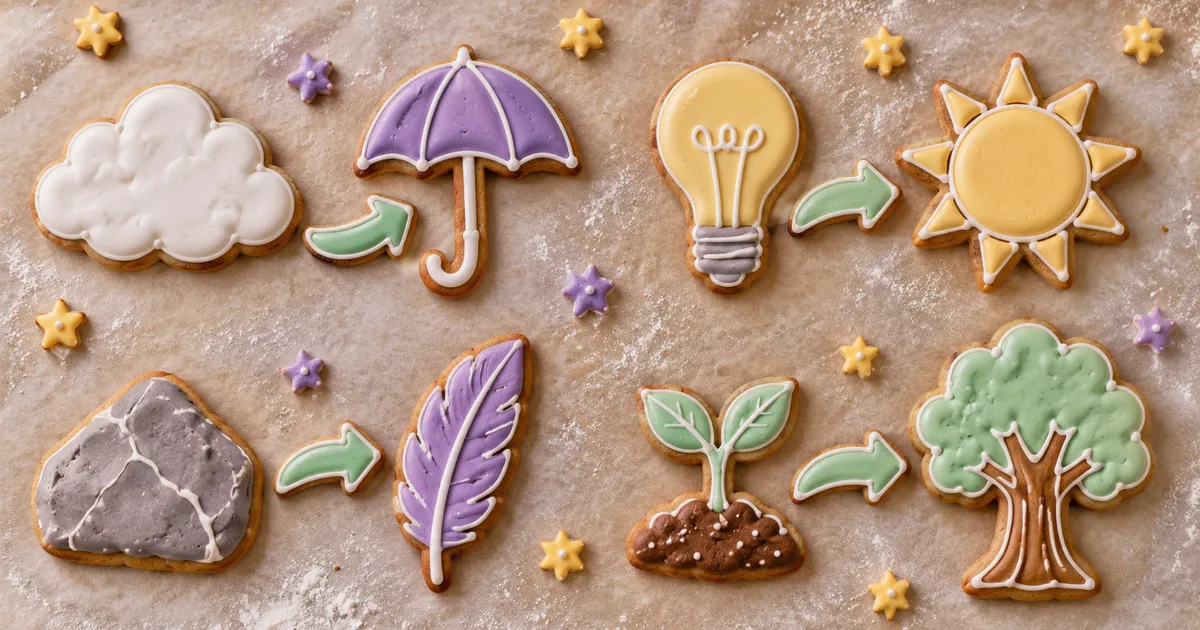
A metaphor describes one thing as another, turning an idea or feeling into a picture. “My bedroom is an icebox” means the room feels cold, not that it stores food. Metaphors for Kids: Examples and Activities guides children through recognising, explaining, and creating figurative language. Start with familiar objects and feelings before exploring time, friendship, or courage. Children need not memorise definitions. They need to hear a metaphor, picture it, and explain the connection.
What a Metaphor Does
A metaphor connects unlike things through a shared quality. In “Her smile was sunshine,” the smile resembles sunshine because both feel warm, bright, or cheerful. Metaphors omit “like” and “as.” A comparison using those words, such as “Her smile was like sunshine,” is a simile.
Young children can explore concrete qualities: hot, cold, soft, loud, fast, or heavy. Older children can interpret hidden links. “Worry is a backpack full of stones” connects emotion with weight and effort. Different answers work when the child explains the connection.
In Metaphors for Kids: Examples and Activities, the goal is not one secret meaning. Children identify the qualities joined by the writer and how the comparison shapes the message.
A Starter Set of Useful Metaphors
Introduce examples in small groups. Read each sentence aloud, ask what picture appears, then discuss the speaker’s meaning. The table progresses from familiar descriptions to ideas requiring deeper interpretation.
Treat Metaphors for Kids: Examples and Activities as a menu, not a test list. Choose examples matching your child’s experience. A child unfamiliar with beehives may understand “The station was a busy kitchen” more easily.
Examples in Context
Context moves children beyond literal readings. Consider: “We walked for an hour, and my legs were jelly when we reached home.” The first clause explains the second: the legs were tired and unsteady, not made from food.
Short exchanges work well. A child might say, “This puzzle is a monster.” Ask, “What makes it a monster?” Possible links include size, difficulty, or fear. Then change one detail: “After we solved the first part, the puzzle became a kitten.” The new image makes the task feel manageable.
Metaphors differ across languages and cultures. In multilingual families, compare familiar expressions without expecting word-for-word translations. Use Metaphors for Kids: Examples and Activities to discuss the English picture and meaning, then find a similar image in another language.
Activities for Different Ages
School-age kids: Use objects, pictures, and movement. Place a feather and a stone on a table. Say, “The feather is a dancer,” then let your child show its movement. Offer two choices when needed: does the image suggest graceful or heavy? Focus each round on one quality.
School-age kids: Play metaphor matching. Write sentence beginnings on cards, such as “The moon is…” or “My school bag is…,” and endings on others, such as “a silver coin” or “a hungry monster.” Your child matches pairs, reads each sentence, and explains the link. Funny combinations work when the explanation makes sense.
School-age kids: Compare tone. Describe homework as “a maze,” “a mountain,” and “a treadmill.” Which version suggests confusion, challenge, or repetition? Older learners can find metaphors in a song, story, advert, or sports report, then rewrite them in plain language.
Simple Practice at Home and in Lessons
Build practice into daily talk. At breakfast, describe the weather with one metaphor. After school, choose an image for the day and explain it: “My day was a roller coaster because it changed from exciting to worrying.” At bedtime, replace one plain story sentence with a vivid version.
For Metaphors for Kids: Examples and Activities practice, our tutors follow three steps across LearnLink lessons: notice the image, name the shared quality, and create an example. Parents can follow these steps without correcting every unusual answer. Ask for the connection before judging the metaphor.
Finish and Explain the Metaphor
Complete: “The rain was…,” “My friend is…,” and “Learning a new word is….” Name one shared quality for each answer. For example, “Learning a new word is planting a seed because both can grow with care.” Replace the image and explain the changed meaning.
Common Mistakes to Avoid
Not every colourful description is a metaphor. “The icy wind touched my face” uses sensory detail and personification. “The wind was a knife” is a metaphor because the wind becomes another thing. Ask which two things the sentence connects.
Do not reject an unfamiliar metaphor. “My happiness is popcorn” works if the child explains that happiness bursts out suddenly or feels hard to contain. But “My happiness is a shoe” needs a shared quality; without one, the comparison may be random.
Children may mix images: “The test was a mountain that sailed away.” Help them sustain one picture: “The test was a mountain, but I climbed it one question at a time.” For multilingual learners, check meaning instead of demanding a direct translation from the home language.
- Try one clear metaphor with children ages six to eight today.
- Use a familiar picture book and identify three metaphors together.
- Practice comparing unlike things without using the words like or as.
- Ask your child to explain what each metaphor means in context.
- Correct confusing comparisons by replacing one vague image with a specific one.
For the rule wording, Wikipedia — English Grammar is a useful reference while the practice examples here stay adapted for children.
Frequently Asked Questions
At What Age Can a Child Understand Metaphors?
Children can explore concrete metaphors from about age four when comparisons use familiar objects, actions, and feelings. Metaphors for Kids: Examples and Activities can start with pictures and movement, then become more abstract as language develops. A young child might explain “The sun is a lamp,” while an older child can discuss “Hope is a light.” Readiness matters more than a fixed age.
How Can I Explain the Difference Between a Metaphor and a Simile?
A metaphor says one thing is another: “The clouds are cotton.” A simile compares with “like” or “as”: “The clouds are like cotton.” Ask your child to identify both things and their shared quality, then switch between the forms. The meaning stays close, but the metaphor sounds more direct.
What Should I Do If My Child Takes a Metaphor Literally?
Accept the literal picture, then test it through context. Ask, “Could the classroom be an actual zoo?” and “What feels similar about them?” Pictures, gestures, and either-or choices help. Let your child identify a shared quality, such as noise or movement, then restate the sentence with that meaning.
How Many Metaphors Should a Child Learn at Once?
Three to five examples suit one short session, especially for a first-time learner. Reuse them in stories, drawings, and conversation before adding more. Older children may compare a larger set, but depth matters more than speed. Explaining, adapting, and creating a metaphor shows more understanding than memorising a list without context.
If your child needs steady speaking practice, start small — choose a trial lesson.
Stay updated on our latest tips and resources by following us on Instagram LearnLink.